"But while he was yet at a distance, his father saw him and had compassion, and ran and embraced him and kissed him."
The Third Sunday in Lent
He spoke also this parable: A certain man had a fig tree planted in his vineyard, and he came seeking fruit on it, and found none. And he said to the dresser of the vineyard: Behold, for these three years I come seeking fruit on this fig tree, and I find none. Cut it done therefore: why cumbereth it the ground? But he answering, said to him: Lord, let it alone this year also, until I dig about it, and dung it. And if happily it bear fruit: but if not, then after that thou shalt cut it down.
The Second Sunday in Lent
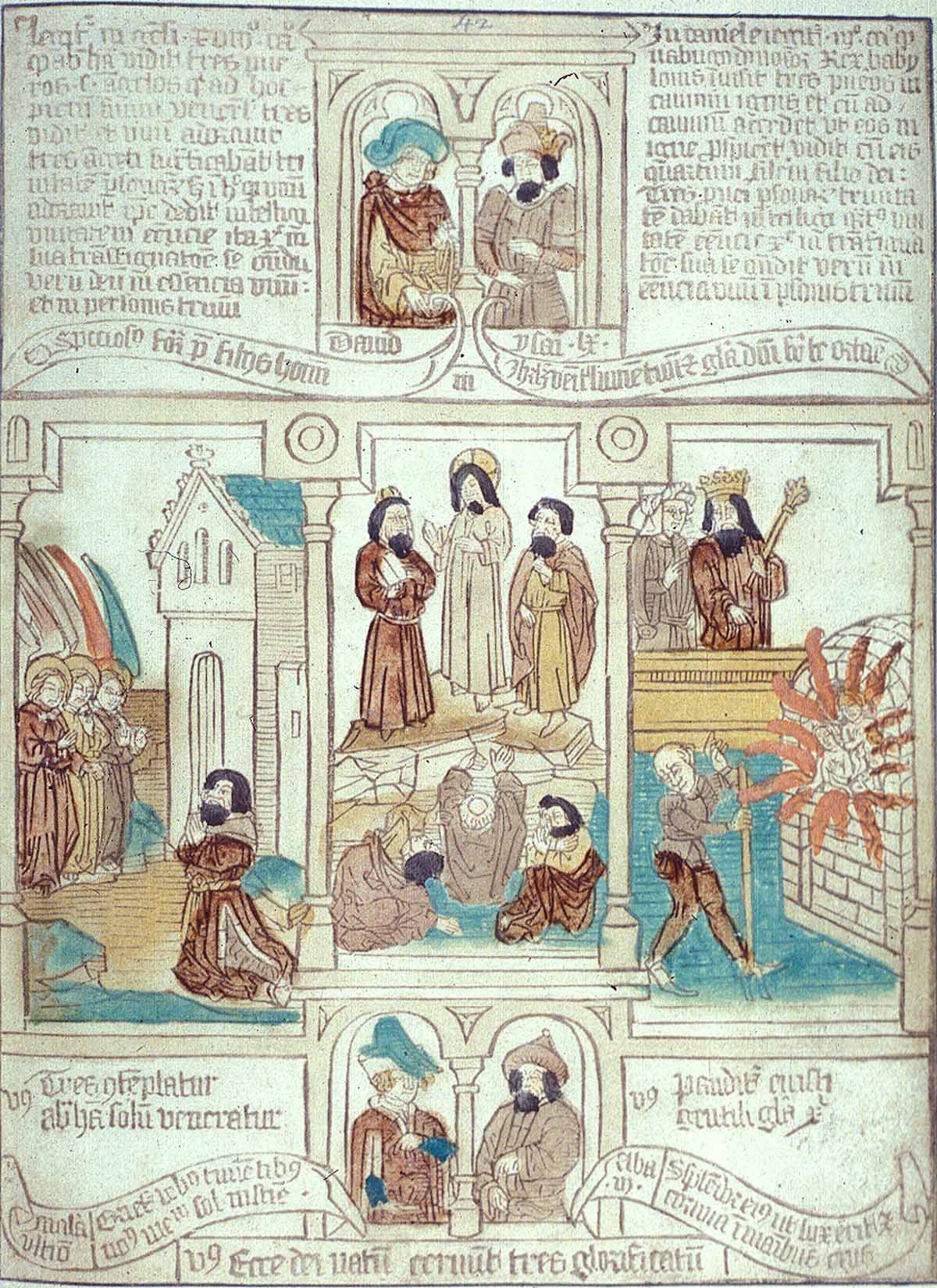
"And as he was praying, the appearance of his countenance was altered, and his raiment became dazzling white. And behold, two men talked with him, Moses and Elijah, who appeared in glory and spoke of his departure, which he was to accomplish at Jerusalem."
Regarding the image:
In this page from a 15th-century Netherlandish 'Biblia Pauperum' (on which see further Image 423) Christ's Transfiguration, flanked by Moses (with horns) and Elisha, is set between its two Old Testament prefigurations: (left) Abraham sees three angels who had accepted his hospitality (Genesis 18:1-3); and (right) King Nebuchadnezzar has three youths placed in a fiery furnace (Daniel 3:25). The page's theme is the mystery of the Trinity: three persons in one divine Nature. As the text top left explains, the three angels signified the Trinity of Persons, but because Abraham worshipped them as one, he indicated the singleness of the Trinity's nature. As the text top right explains, when Nebuchadnezzar saw, to his amazement, a fourth in the surviving burning fiery furnace, like the Son of God, this signified that the three youths represented the Trinity of Persons, and the fourth the singleness of their nature. Both prefigurations point to the Transfiguration's significance in revealing the Trinity. The four prophetic texts all emphasize light and beauty: Psalms 44:3 (45:2); Isaiah 60:1 (top right); Malachi 4:2 (bottom left); Habbakuk 3:4(right); the dazzlement of the glorified body is registered by the figures below Christ. Henry 1987, p.71 Henry, 1987
The First Sunday of Lent
Ash Wednesday
ASH WEDNESDAY
CONFESSION
5.10 - 5.45PM
+
HOLY MASS with IMPOSITION OF ASHES
6.00PM
"Dust thou art, and unto dust shalt thou return."
THE DISCIPLINES OF LENT
"During Lent, the Church asks us to surrender ourselves to prayer and to the reading of Scripture, to fasting and to giving alms. The fasting that all do together on Fridays is but a sign of the daily Lenten discipline of individuals and households: fasting for certain periods of time, fasting from certain foods, but also fasting from other things and activities. Likewise, the giving of alms is some effort to share this world equally—not only through the distribution of money, but through the sharing of our time and talents...
...Ash Wednesday and Good Friday are obligatory days of fasting and abstinence for Catholics. In addition, Fridays during Lent are obligatory days of abstinence.
For members of the Latin Catholic Church, the norms on fasting are obligatory from age 18 until age 59. When fasting, a person is permitted to eat one full meal. Two smaller meals may also be taken, but not to equal a full meal. The norms concerning abstinence from meat are binding upon members of the Latin Catholic Church from age 14 onwards.
If possible, the fast on Good Friday is continued until the Easter Vigil (on HolySaturday night) as the "paschal fast" to honor the suffering and death of the Lord Jesus, and to prepare ourselves to share more fully and to celebrate more readily his Resurrection."
There is much more information and many Lenten resources available from the USCCB here!
“For all of us, then, the season of Lent in this Jubilee Year is a favourable time to overcome our existential alienation by listening to God’s word and by practising the works of mercy. In the corporal works of mercy we touch the flesh of Christ in our brothers and sisters who need to be fed, clothed, sheltered, visited; in the spiritual works of mercy – counsel, instruction, forgiveness, admonishment and prayer – we touch more directly our own sinfulness. The corporal and spiritual works of mercy must never be separated. By touching the flesh of the crucified Jesus in the suffering, sinners can receive the gift of realizing that they too are poor and in need. By taking this path, the ‘proud’, the ‘powerful’ and the ‘wealthy’ spoken of in the Magnificat can also be embraced and undeservedly loved by the crucified Lord who died and rose for them. This love alone is the answer to that yearning for infinite happiness and love that we think we can satisfy with the idols of knowledge, power and riches. Yet the danger always remains that by a constant refusal to open the doors of their hearts to Christ who knocks on them in the poor, the proud, rich and powerful will end up condemning themselves and plunging into the eternal abyss of solitude which is Hell. The pointed words of Abraham apply to them and to all of us: ‘They have Moses and the prophets; let them hear them’ (Lk 16:29). Such attentive listening will best prepare us to celebrate the final victory over sin and death of the Bridegroom, now risen, who desires to purify his Betrothed in expectation of his coming.
Let us not waste this season of Lent, so favourable a time for conversion! We ask this through the maternal intercession of the Virgin Mary, who, encountering the greatness of God’s mercy freely bestowed upon her, was the first to acknowledge her lowliness (cf. Lk 1:48) and to call herself the Lord’s humble servant (cf. Lk 1:38).
—Pope Francis”
This week's Corpus Christi newsletter!
Quinquagesima Sunday (2/7): Mass Propers
Click here to read Collect and Lessons for this Sunday, Quinquagesima, 7 February 2016.
"Quinquagesima"
Christina Rossetti
Love is alone the worthy law of love:
All other laws have presupposed a taint:
Love is the law from kindled saint to saint,
From lamb to lamb, from dove to answering dove.
Love is the motive of all things that move
Harmonious by free will without constraint:
Love learns and teaches: love shall man acquaint
With all he lacks, which all his lack is love.
Because Love is the fountain, I discern
The stream as love: for what but love should flow
From fountain Love? not bitter from the sweet!
I ignorant, have I laid claim to know?
Oh, teach me, Love, such knowledge as is meet
For one to know who is fain to love and learn.
Fr Pius Pietrzyk, O.P. at Corpus Christi this Sunday!
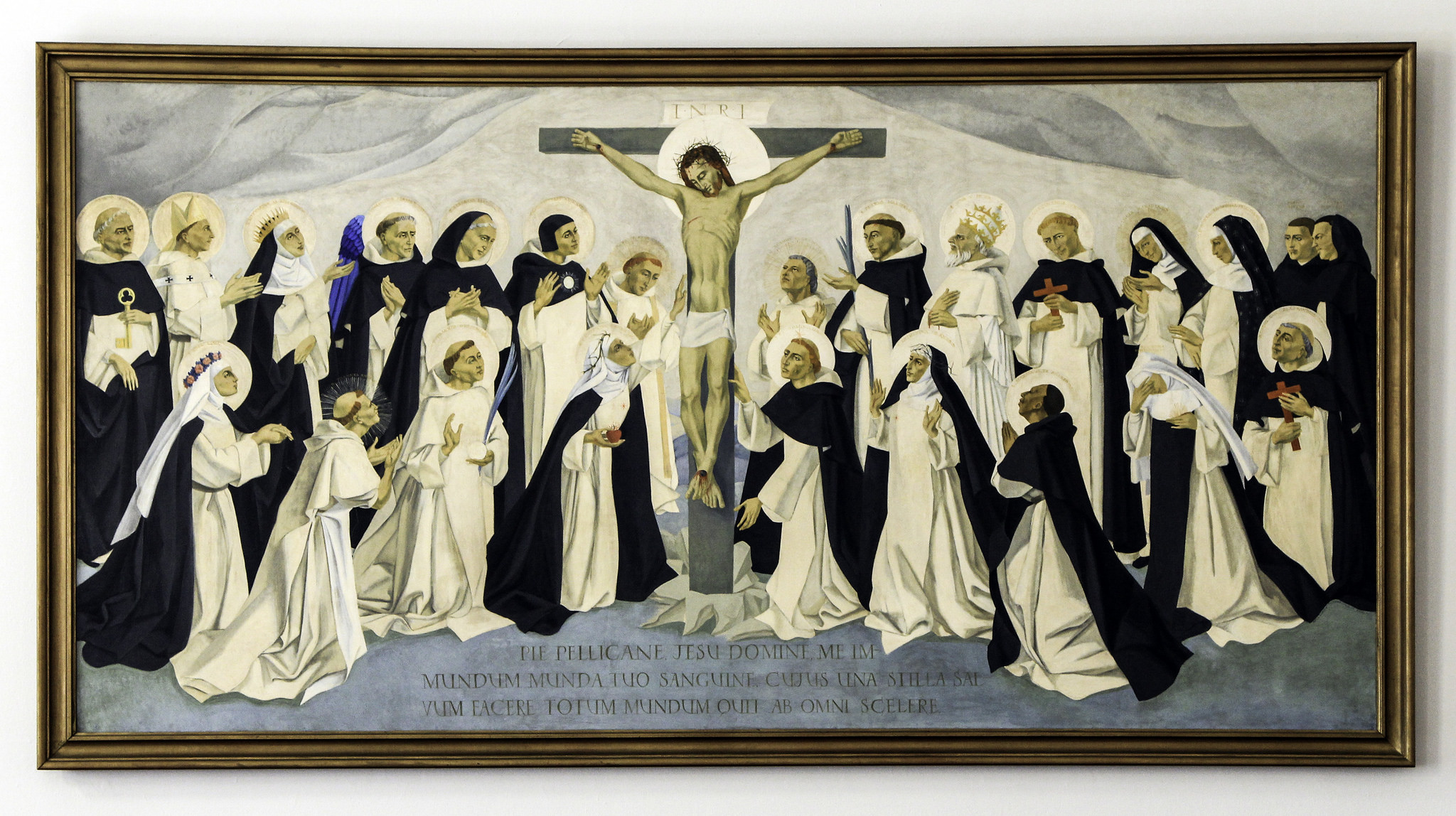
Great news! Fr Pius Pietrzyk, O.P. will be concelebrating Mass with Fr Allen and preaching this Sunday, 31 January. Fr Pius is a Dominican friar of the Province of St. Joseph, currently completing doctoral studies in canon law in Rome.
Fr Pius is in Charleston in his capacity as a board member of the Legal Services Corporation. The Legal Services Corporation provides civil legal aid for low-income Americans and is headed by a bipartisan board of directors whose 11 members are appointed by the President and confirmed by the Senate. Fr. Pius has served on the board since 2010.
Dominicans have in many ways been friends and encouragers of the Ordinariate since its foundation. Furthermore, the Dominicans are celebrating the Order's 800th anniversary this year. Fr Pius' presence is a wonderful privilege for us - so come to Mass, and invite a friend!
Faithfully,
Fr Allen
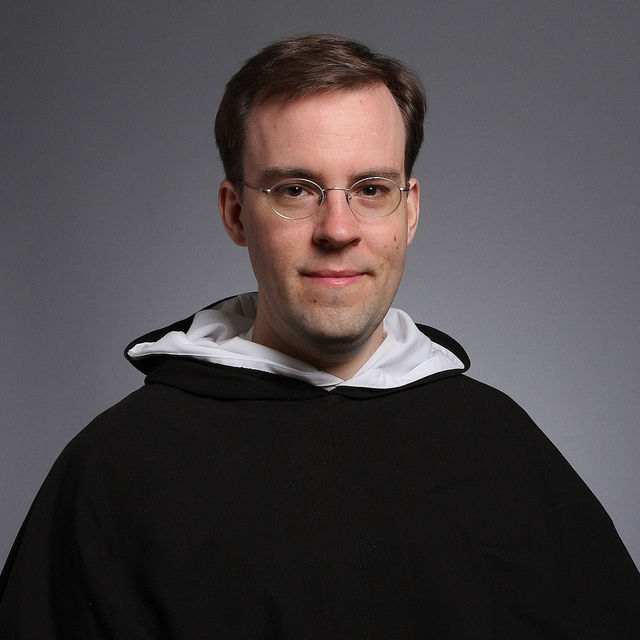
Father Pius Pietrzyk, OP is a Priest of the Order of Preachers. He is currently engaged in academic studies at the Pontifical University of St. Thomas Aquinas (the Angelicum) and pastoral service at the Basilica of San Clemente in Rome, Italy. From 2008 to 2011, he served as the Parochial Vicar at St. Thomas Aquinas Church in Zanesville, Ohio. Father Pius has served as a Member of the Board of Directors of the Legal Services Corporation since 2010. During the summer of 2004, he was a pro bono attorney with Immigration Services of the Catholic Charities of New York. Previously, he was an Attorney with Sidley & Austin from 1997 to 2000. Father Pius received a B.A. from the University of Arizona, a J.D. from the University of Chicago, and an S.T.B./M.Div. and S.T.L from the Pontifical Faculty of the Immaculate Conception in Washington, D.C.
Sexagesima Sunday: Mass Propers
Click here to view the Collect and Lessons (pdf) for this Sunday, 31 January 2016, "Sexagesima"
Septuagesima Sunday: Mass Propers
Click here to view the lessons & minor propers for Mass this Sunday (which, in the Ordinariates, is Septaugesima, the beginning of Pre-Lent or "Shrovetide").